

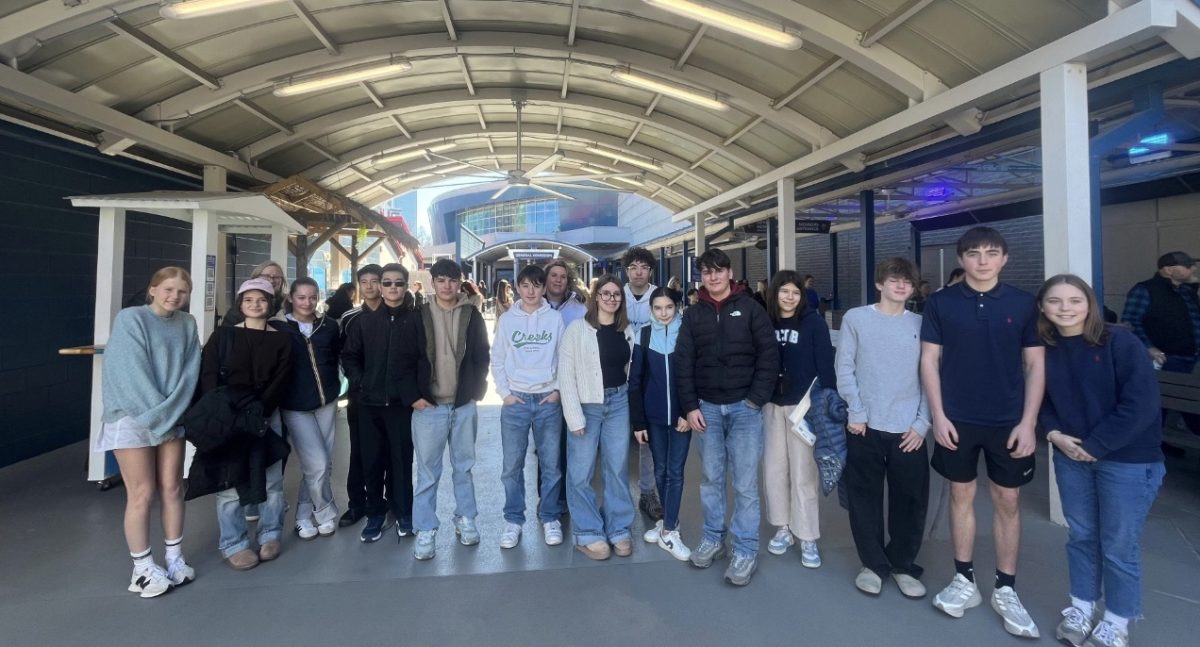
In the French exchange program, students don’t only learn culture, but a new way of living. Led by French teacher Jennifer Speir, students explore culture outside of the classroom while also hosting a student from France of their own in February.
When Speir joined the language department, the exchange program was just recovering from the pandemic and looking for schools in France online. Eventually they found a school in an extremely small town of only 4,700 residents called Barbezieux.
Speir explains they chose such a rural town because they wanted a different life from the city. “They really get a feel of day to day life. So we’re talking about real rural family culture,” she says. “If we were to stay with a school in Paris, it could possibly resemble our international urban community of Atlanta.”
Instead, students get to experience a different pace of living. There are no clubs at school like how it is here at Westminster, so students join clubs in their community. It’s a culture shock for both Westminster and foreign students.
The students receive each other’s numbers on Whatsapp a few weeks before the French students arrive, with some duos hitting it off and some taking a while to warm up to each other. Speir gives the students grace, however, for the French students are experiencing culture shock—and making friends who speak a different language immediately can be hard.
But at least they stay busy. Not only do the French students experience day-to-day life of Westminster students, but they also get the chance to explore the city. While they learn English as a language at their school, they also learn American culture, like the Civil Rights Movement, the progression of slavery, and the Civil War. In Atlanta, they get to actually visit the Martin Luther King Center, the National History Museum, and the Atlanta History Center to bring this learning to life.
They don’t just learn culture from museums. They take trips to Truist Park, Chick-Fil-A, and the most recent trip got to experience Super Bowl parties, a mind-blowing night for those who had never experienced the chicken wings and big TVs.
Speir most enjoys just seeing students create bonds with each other. She understands thirteen and fourteen year old kids already worry about how peers see them, and when doing it in a different language, it’s especially hard. “So I saw [foreign students] get more and more comfortable to just laugh as the days passed,” she says. “Like ‘I don’t know what I’m trying to say, I’m not sure I got what you said’ and it really helps to relax.” Students also stay in contact after parting, showing the beautiful bond kids from around the world can build.
For prospective host students, Speir says the process to select host families is a difficult one. The language department can only select twelve students and just aren’t able to accept as many students as they would like, though most applicants show great qualities and passion. She says the application goes through a large committee, including administration, counselors, and grade chairs. The committee looks at both academic and personal qualities. “They have to be a strong and enthusiastic language student in French or Spanish to apply. And they have to go and be ready and open minded.”