

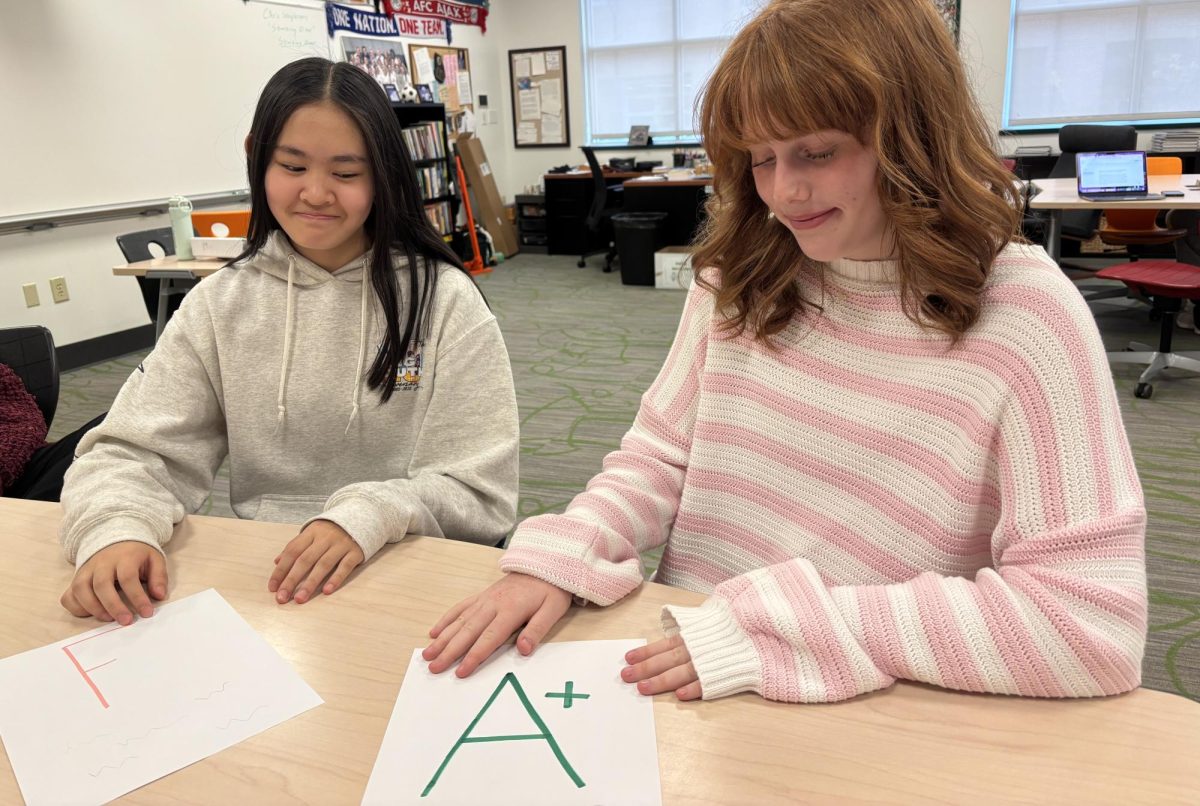
I am sure that we have all heard our teachers say “Your grades are for you and you only; do not share them.” Most of us brush this off and continue on with our day. But have you ever stopped and wondered why they’re saying this.
A phrase often repeated is “Comparison is the thief of joy.” This is most clear when grades get shared. A situation I can relate to: feeling positive about the grade I received, asking a friend what they got, and then ending up feeling worse afterwards. Hearing one number can turn confidence into immediate disappointment.
Sharing grades with others, even when they’re your friends, can lead to students feeling the need to “keep up” or even “be better” than their friends. Constantly knowing the academic state of your friends instead of focusing on your own progress can lead to Westminster becoming an even more competitive environment.
In addition, you break personal boundaries when you share grades. Grades reflect your personal growth and strengths and should stay private. Students may want to improve their grades to keep up with the others around them instead of focusing on learning and growing for themselves.
We often make assumptions about people without even realizing it when we learn how they scored on something. A single test score can make someone seem “smarter” or “not smart enough”. I have even overheard students discussing the grades of other students and placing these harmful labels on them.
As pressure increases, cheating may soon follow. After learning that someone else continuously performs well on assignments, a struggling student might start looking over that person’s shoulder and copying their answers.
Although sharing grades may seem harmless, its consequences run deeper than what can be observed. Unnecessary competition, lost confidence, and added pressure are all things that unfortunately come with students sharing their grades.